

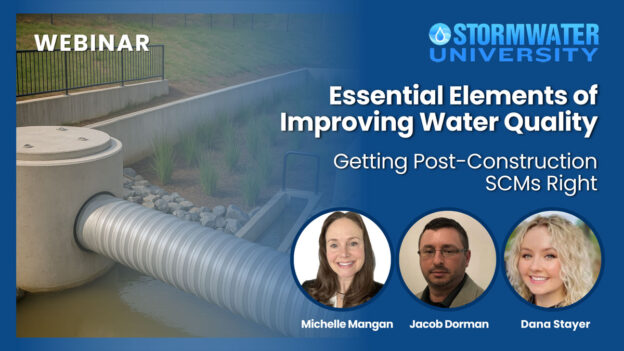
Date: December 17, 2025 | 2:00 PM EST/1:00 PM CST
Presenters: Michelle Mangan, Jacob Dorman and Dana Stayer
Credits: 1.0 PDH | 0.1 CEU | Approved for all Envirocert International, Inc. (ECI) Certifications: Approval #PDH-0213
Sponsor: Advanced Drainage Solutions (ADS) & Contech Engineered Solutions
Cost: Free
Regulating common pollutants found in stormwater runoff is authorized under the Federal Clean Water Act (CWA) and implemented through the United States Environmental Protection Agency’s (EPA) National Pollutant Discharge Elimination System (NPDES) program. Municipal and construction stormwater sector permittees are required to establish pollution reduction goals and develop compliance strategies, which often integrate non-structural and structural post-construction stormwater management control measures (SCMs).
However, ensuring that structural SCMs are effectively incorporated into compliance toolboxes can be challenging if regulators, designers, and other industry stakeholders do not have a clear understanding of the regulatory requirements to which such solutions are held. This webinar will take a deep dive into practical guidance on the regulatory context, selection and design considerations, and performance verification programs that support the successful use of innovative SCMs.
The content is grounded in current industry consensus, best available science, and proven practices from across the stormwater sector. Special attention will be given to proprietary manufactured treatment devices (MTDs) and the role they play in meeting post-construction water quality goals. Participants will leave with actionable insights that can strengthen their stormwater programs and designs while also improving local water quality outcomes.
Learning Objectives:
- Understand the Regulatory Framework and Design Basis for SCMs
- Attendees will be able to appreciate the historical context behind requiring pollutant reductions, recognize the need to establish key design parameters so performance expectations are met and identify critical SCM performance verification programs that can be used to justify inclusion in the compliance toolbox.
- Evaluate SCM Technologies and Select Appropriate Systems Based on Site Constraints and Pollutant Targets
- Attendees will be able to identify various SCM technologies—including manufactured and non-proprietary systems—and assess their suitability based on pollutant removal goals, hydraulic and geotechnical constraints, and lifecycle maintenance considerations.
- Apply Performance Verification Protocols and Certification Standards to Ensure SCM Compliance
- Attendees will be able to describe the role of third-party verification programs (e.g., STEPP, TAPE, NJCAT) and testing protocols (e.g., ASTM, TAPE, NJDEP) in validating SCM performance and understand how to use concurrence with other state certification programs to ensure regulatory approval and project success.
About the Presenters

Michelle Mangan brings over 20 years of experience in the stormwater and wastewater infrastructure industry, with a career dedicated to advancing clean water solutions through product innovation, regulatory compliance, and national standards development. At Advanced Drainage Systems (ADS), she leads engineering and environmental strategy initiatives, aligning regulatory frameworks with business goals, accelerating product development, and driving technical engagement with government agencies and key clients to protect water resources and build more resilient communities.
Michelle is an active participant in ASTM International, the Canadian Standards Association (CSA), ISO, STEPP and SWEMA, and she was honored with ASTM’s Special Service Award in 2023 for her leadership in standards development. She holds a Bachelor of Science in Ocean Engineering from the University of Rhode Island. Outside of work, Michelle enjoys travel and outdoor adventures including cycling, hiking, and camping.
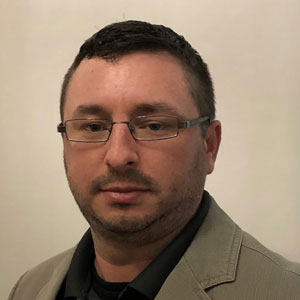
Jacob Dorman is a Regulatory Manager for Contech Engineered Solutions. In this role since 2016, he helps to facilitate the development of progressive, science-based stormwater management policy across the Mid-Atlantic and Southeast United States. Previously, Jacob spent over 12 years in various municipal stormwater program management and long-range, comprehensive planning positions, including serving as an MS4 program manager in Virginia. In total, he has spent nearly his entire 20-year professional career immersed in the stormwater management field! Jacob holds a BS in Environmental Science from Lynchburg College in Lynchburg, VA, serves on the Board of Directors for the Stormwater Equipment Manufacturers Association (SWEMA), and actively participates in multiple state-level stormwater associations throughout the country.

Dana Stayer is a Regulatory Specialist at StormTrap, where she leads efforts in securing regulatory approvals and offers expert technical guidance to regulators, design engineers, and consultants in selecting and evaluating post-construction Best Management Practices (BMPs). With a civil engineering background and a specialization in stormwater and environmental systems, Dana brings both technical precision and passionate advocacy to her work.
A graduate of Valparaiso University with a B.S. in Civil Engineering, Dana is deeply engaged in stormwater organizations throughout the Eastern United States. She is committed to public education on the critical role of stormwater management in environmental protection and infrastructure resilience.
Sponsored by

Produced in partnership with the Stormwater Equipment Manufacturers Association (SWEMA)
Course Includes
- 1 Lesson
- Course Certificate